AI at the Ballot Box: How Synthetic Media Is Rewriting Campaign Season
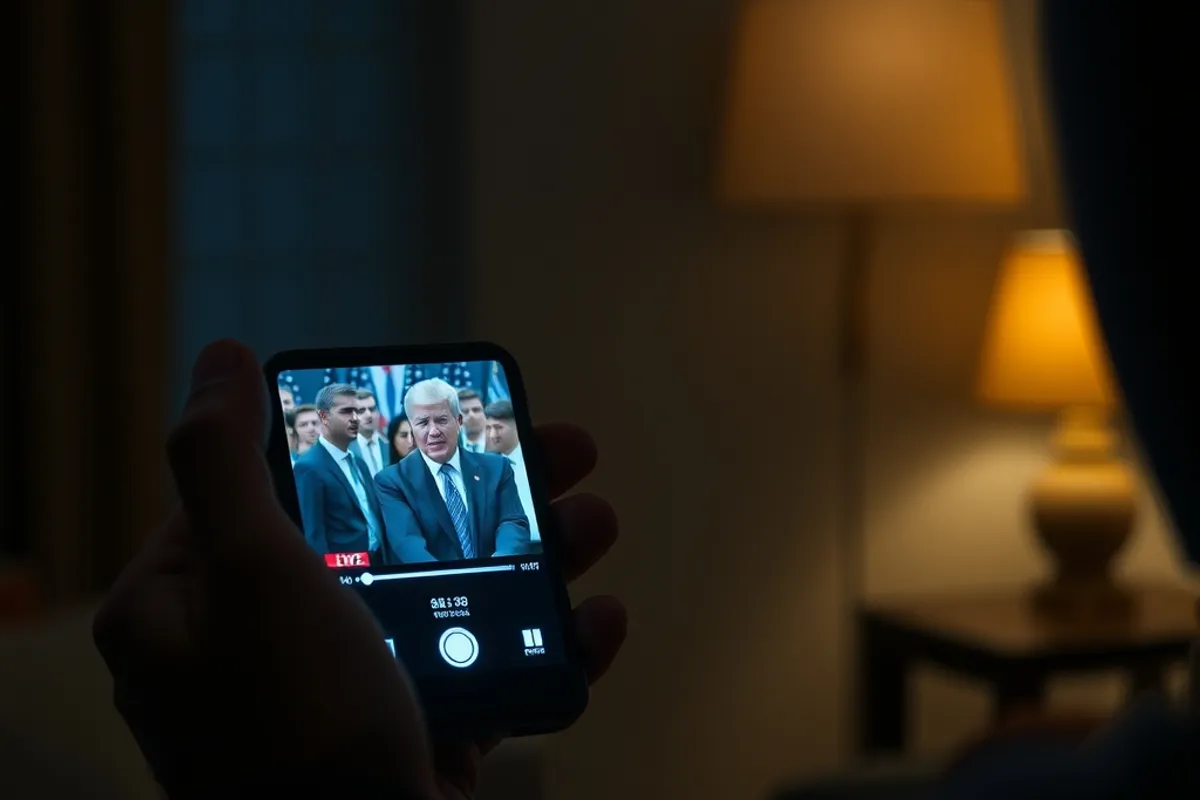
The first synthetic election ad of the cycle lasted six hours online. It showed a candidate saying something he had never said, in a voice that was almost right, with lip movement slightly out of sync. It was flagged by a user, reviewed by a platform team and removed before most voters saw it. The next one will be better, cheaper and harder to catch. That is the new baseline for 2026.
What is actually being made
Most synthetic political content is not a cinematic deepfake. It is a cheap, fast artifact: a cloned voice in a robocall, a still image of an event that never happened, a short video of a candidate stuttering. The goal is rarely to fool a careful viewer for long. It is to create a clip that spreads faster than the correction, because corrections are boring and clips are not.
Campaigns themselves use the tools legitimately, translating speeches into languages the candidate does not speak or producing rapid-response ads. The line between acceptable production and deception is disclosure. When a voter cannot tell who made a message or whether the events in it occurred, the marketplace of ideas stops functioning as advertised.
The labeling fight
Twelve states now require some form of label on synthetic political media, but the rules disagree on almost everything: what counts as synthetic, when the label must appear, who is liable and how close to an election the restriction applies. A campaign can comply in one state and violate the same practice next door. Federal legislation has stalled over First Amendment concerns and the practical difficulty of defining intent.
Platforms have filled the gap with their own policies, which vary by company and change without much notice. Some label detected AI content; others remove only the most deceptive election fakes. Enforcement relies heavily on user reports, which means the content most likely to spread is also the content least likely to be reviewed before it does.
"The correction reaches hundreds. The clip reaches millions. That asymmetry is the whole problem."
Can detection keep up?
Detection tools have improved, but the honest answer is no, not reliably. Watermarking works only when the generating tool cooperates, and open models do not. Forensic analysis of compression artifacts can catch some fakes, but quality improves every quarter. Independent testers put accuracy at roughly 80 percent on realistic political clips, which sounds impressive until you remember that 20 percent error on a viral video is more than enough to muddy a close race.
What voters are doing
Voters are adapting faster than institutions. Surveys show growing awareness of deepfakes and a habit of checking whether a striking clip appears on a reputable outlet before sharing it. That instinct is unevenly distributed by age and media diet, but it is real. Local news, surprisingly, has become an important verification layer: a national clip that local reporters cannot confirm often dies quietly.
There is also fatigue. When every outrageous clip might be fake, some voters stop believing anything, including accurate reporting. That collapse of trust is harder to repair than any single forged video. Newsrooms are responding with more transparency about what they have and have not verified, but the incentive structure still favors speed.
What would actually help
Three measures have evidence behind them. First, provenance standards that attach a verifiable origin to a piece of media at the moment it is created, not after it spreads. Second, fast, well-resourced election integrity teams at platforms, with public reporting on takedowns. Third, media literacy that teaches verification as a habit rather than a lecture. None is a complete fix. Together they raise the cost of deception.
The deeper issue is structural. Synthetic media is cheap, and attention is scarce. Any solution that depends on every voter doing forensic work is not a solution. The burden has to shift toward the producers and distributors of the content, which is exactly where the political fight is headed.
Related reading: our report on local ballot measures and global urban experiments.